Thursday, August 24, 2017

Delectable sheets of soy

Tofu and soy sauce are common and quintessentially Taiwanese foods, and a great deal of the feed given to Taiwan's livestock is soy-based. This commodity is now as important to the country's food system as rice – yet almost all of the soy consumed in Taiwan (whether by humans or livestock) is imported from the US, Canada, Brazil, and Argentina.
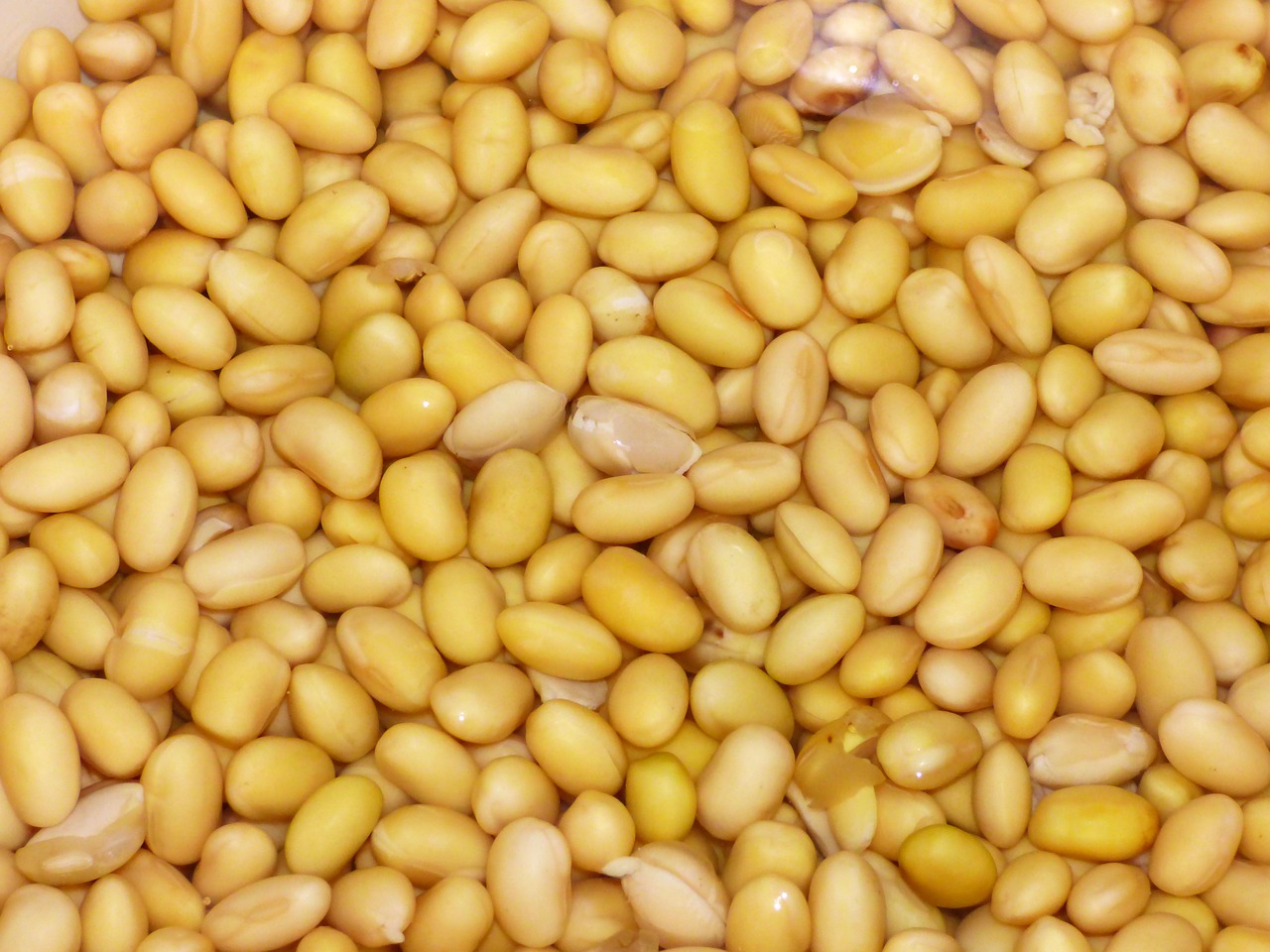
Uncooked, unprocessed soybeans are a light yellow. Good quality water is essential for the production of soy foods, and one reason why Daxi in Taoyuan has become synonymous with dried bean-curd, also known as dòugān (豆干). A lot of the beans imported into Taiwan are, of course, turned into soy sauce:
East Taiwan has far fewer people and far less industry than the western half of the island, so it's reasonable to assume the groundwater in Hualien and Taitung counties is pretty good.

One business making the most of East Taiwan's advantages is Dah Chi Bean Curd Sheet. There's an English sign outside the premises at 39-2 Dapu Road, Dapu Village, Chishang Township. If you need to ask a local for directions, show him/her the Chinese name 大池豆皮店, pronounced in Mandarin Dàchí dòupí diàn.

Travellers who read Chinese will likely guess Dah Chi ('big pond') takes its name from a nearby geographical feature. As the crow flies, Dapo Pond is less than 500m away.
The production process is, on the face of it, quite simple. Nevertheless, considerable skill and patience are required. When soy milk is boiled in an open pan, a film forms on the surface (if you've ordered piping hot soy milk at a Taiwanese breakfast shop, you'll have noticed how quickly the film appears). Some people just stir the film into the liquid, but tofu skin artisans like the staff at Dah Chi collect the yellowish film and hang it up for to dry.

The boss rises at four each morning to grind soybeans and begin boiling the milk.
Visitors don't come here merely to witness soy-sheet production. In addition to selling the sheets to households and restaurants in the area (many people use it to wrap rice when making sushi), Dah Chi sells deliciously fresh fried soy sheets (NT$65 per serving), sweetened and unsweetened soy milk, and bean-curd pudding.
Business hours are 6.30 in the morning until 6 in the evening, or earlier if they sell out. This kind of food is usually eaten for breakfast, so it makes sense to come here before you begin your day's sightseeing. At first glance, the fried soy sheets (above and below) could be mistaken for another Taiwanese favorite, the scallion pancake (蔥油餅).
Bean-curd pudding, sometimes called tofu pudding (pictured below) is known as dòuhuā (豆花) in Mandarin. It's often flavored with unsalted peanuts, honey, adzuki beans, or syrup. It makes for a tasty breakfast or dessert.
Some Taiwanese consumers avoid genetically-modified organisms, so many food producers (among them Dah Chi) highlight the fact they use non-GMO produce.
One soy-based delicacy that isn't available at Dah Chi, but which you must try at some point during your stay in Taiwan, is stinky tofu (chòu dòufu, 臭豆腐). If you'd like to try it while in Chishang, see this Chinese-language blog entry for directions to a stinky-tofu eatery near Dah Chi. In night markets throughout Taiwan, stinky tofu often comes served with some spicy sauce and pickled cabbage, like this:
All but the first, second and last of the photos accompanying this blog post were taken by Cheryl Robbins, a leading authority on tourism in Taiwan's indigenous areas. The post was sponsored by the East Rift Valley National Scenic Area Administration.

Monday, August 7, 2017

Luye and Longtian by bicycle

Taitung is probably Taiwan's most unspoiled and scenic county. Of its 16 divisions (one city, two urban townships and 13 rural townships), perhaps the most attractive is Luye (鹿野鄉). Wherever you go in this township, which covers almost 90km2, you'll see both flat land and steep mountains.
At the time of writing, the population was just under 8,000, divided among seven villages. Many tourists focus their energy on Longtian (龍田), because almost a hundred years ago it was selected by the Japanese colonial authorities for development into a model immigrant village. The newcomers were Japanese eager to leave their overcrowded homeland. The policy was not a great success, however. Many migrants soon left the east, preferring the greater comfort and convenience of the big cities in Taiwan's west.

The Japanese authorities laid out a sensible grid-pattern of streets. In this sense, the village is quite different to many rural settlements in Taiwan, which developed without any sense of urban planning, influenced by the precepts of fengshui. As in other migrant settlements, there was a clinic, a police station, and a guidance office providing farming and technological assistance. 
The most convenient place to rent a bike is A-Du's Shop (阿度的店, pictured below) at 232 Guangrong Road, about 100m east of Longtian Elementary School. The shop's telephone number is (089) 550-706; the opening hours are 8:30 am to 6 pm every day. The range of vehicles available for hire includes four-seat electric-powered carts.
Tourists can follow Longtian Bikeway (龍田自行車道), 7.2km of designated bike paths, or just wander freely. Bilingual signs make finding your way around quite easy, but you'll likely have to come to a complete halt to read the rather small English words on signposts like these.
For many, the highlight of the bikeway is Wuling Green Tunnel (武陵綠色隧道, below), a stretch of road shaded by 60-year-old Indian Almond trees. Drive/ride with special care here, as some tourists like to lie down on the road surface to better appreciate the trees.
Wherever I go in Taiwan, I seek out Japanese-era landmarks and architecture. Luye Shrine (鹿野神; 308 Guangrong Road) is a Shinto place of worship, built in 1923 using funds provided by one of the Japanese-owned companies then dominating Taiwan's sugar industry. 
As with many other overtly Japanese structures, this building was demolished after World War II. The foundations remained in place, however, and the shrine (pictured above) was rebuilt in 2014.
Whether you're riding a bike, driving a car, or taking advantage of the #8168 Tourist Shuttle Bus (go here for route and schedule information), do get yourself to Luye Gaotai (鹿野高台, "Luye Plateau") as the views, like those above, never disappoint. Part of this tableland is given over to tea cultivation; another part is a launchpad for paragliders.
The township government is especially proud of the tea, pineapples and lychees that grow here, but the humble banana also thrives.
Anyone with an interest in nature should take a look at the Yulong Spring Eco-Trail (玉龍泉生態步道), which begins across the road from Shengan Temple (聖安宮), a small shrine in the lovely village of Yongan (永安). The trail goes down to a creek that's exceptionally rich in insect life. It's also possible to continue hiking to Luye Gaotai.
This blog post was sponsored by the East Rift Valley National Scenic Area Administration.

Monday, July 31, 2017

Revisiting Guanshan's Bicycle Trail

Completed in 1997, Guanshan Bicycle Trail (關山自行車道) was one of the first tourist-oriented bike paths in Taiwan. Its stunning success (a reported 700,000 visitors in 2001) inspired other towns around Taiwan - notably Meinong in Kaohsiung - to create their own bike-tour routes. Judging by the number and size of the bike-rental businesses I saw when passing through the town earlier this year, it still attracts a good number of tourists keen to enjoy the scenery and fresh air while getting a some exercise. 
The 4m-wide bikeway is certainly family-friendly. The first time I was here, my wife and I managed to complete the 15.2km-long circuit without any difficulty, even encumbered by our then-infant son.
The first five photos with this blog post are from our first visit several years ago. With one exception, the second batch is from earlier this year. Nowadays my son has the muscle and stamina to pedal his parents around, instead of the other way around!
A key part of the circuit is the 32-hectare Guanshan Water Park (關山親水公園, pictured below), down by the Beinan River. Some people come here to watch birds or to row a boat. According to this webpage, the patch of land used to a dumping ground. You'd never guess it from its current impressively tidy appearance, and the park certainly deserves some of your time... 
...but you get far better views from the highest part of the bike trail, near the road that leads up past fields of millet and stands of mahogany to the indigenous community of Zhongfu (中福).
Hats are essential, even if the weather isn't so bright you need for sunglasses. From more than one personal experience, I know it's possible to get sunburned through murky cloud.
Guanshan's population is slightly over 8,700 people. In the language of the indigenous Amis people, who are now outnumbered by Taiwanese of Hakka origin, it was known as Kinalaungan. Within the downtown, there's a Police History and Culture Museum (關警史蹟文物館; open Tue-Sun 10-11 and 3-4 only; enter through the police station at 27 Zhongzheng Road; 中正路27號), part of which occupies the original one-story station, built in 1932. Over 200 items are on display but there’s hardly any little English labeling; nonetheless, the riot gear and cells need no explanation. 
Even if the exhibits hold no interest for you, you'll likely agree the garden if a lovely place to relax for a little while. The photo above comes from this Chinese-language blog, where you'll also find more than dozen other excellent images of the police museum.
As in Luye and other popular biking spots in the east, the range of vehicles available for hire includes electrically-powered bikes and three-person pedicab-type carts.
Apart from the occasional eagle high overhead, the most interesting fauna you'll likely see are water buffalo cooling off in the creek at the bottom of the valley.
Where do you go once you've completed the bike trail and you still have time and energy? Whether you're starting from Guanshan or Chishang, it makes sense to push on across the river and then to Wanan Elementary School Zhenxing Branch Campus (萬安國小振興分校) at the 11km marker on Road 197. The campus, just under 6km from Guanshan Railway Station, features indigenous-themed murals and several gorgeous banyan trees. Whether you approach from the north or the south, getting here means a little hill climbing, but there’s almost no traffic on this road. 

This blog post was sponsored by the East Rift Valley National Scenic Area Administration.

Thursday, July 20, 2017

Where plantations are becoming forests: Cycling around Guangfu

King Liu, the founder of Taiwan's best-known bicycle manufacturer - and an enthusiastic cyclist despite being in his early eighties - often says: "Driving is too fast, walking is too slow. By riding a bike, you can deeply immerse in Taiwan and appreciate the land." If he was thinking about one particular region when he first said that, it may well have been the East Rift Valley, and perhaps Guangfu Township in particular.

Guangfu used to be the sugar capital of the east, and the smokestack of the shuttered sugar factory is the town's most impressive man-made landmark. Far more interesting for many visitors are the surrounding natural attractions, principally Mataian Wetland and the expanse of greenery now designated Danong Dafu Forest Park (大農大富平地森林園區). Most of the tens of thousands of trees planted throughout the park - land formerly used to grow sugarcane - aren't yet mature, but wherever you turn, there are wild flowers!
As is true throughout Taiwan's (with the exception of Taroko Gorge during peak season), the roads around Guangfu are never crowded with cars. Cyclists eager to explore shouldn't be afraid to venture onto the main north-south road, Highway 9 (pictured below).
Guangfu Bikeway (光復自行車道) is 15.9km long and can be completed in under two hours, but allocating more time and going further afield is highly recommended. To plan your bike trip, this webpage is a good place to start. It has the addresses and contact information for two bike-rental businesses in Guangfu, as well as a useful map of the bikeway and the surrounding area.
Thanks to the arrival in Taiwan of oBike, a Singaporean company that has placed hundreds of its distinctive yellow two-wheelers around the island. These can be rented via a smartphone app, which can be downloaded from this website.  You'll likely see a row or two of them across the road from Guangfu Railway Station. 
Cyclists should be prepared for some gentle gradients near Mataian Wetland (image below), where the bikeway approaches Maxishan (馬鍚山). Google Maps implies it's possible to get very near the top of this mountain, the height of which I haven't been able to confirm. However, I know from hiking expeditions over the years that what appears on a map may not exist in reality; typhoons and earthquakes quickly destroy roads that aren't maintained.
If pedaling makes you hungry, stop at Shin-Liu Farm (a tourism business, not a farm in the traditional sense) for its signature watercress waffles.
Mataian and nearby Dabalong (太巴塱) are both Amis strongholds, but you're only likely to see tribesmen and women wearing traditional finery if you come on a Sunday (when many people dress up for church) or during a festival such as the summertime harvest celebrations.
The photo below of Danong Dafu Forest Park comes from the website of Hualien County Government's Tourist Service Network, where you'll find quite a bit of useful information.  
From Guangfu Railway Station to Lintianshan is just 9.4 km one way, well within the abilities of enthusiastic cyclists. Once a bustling settlement of loggers, their families and hangers-on, Lintianshan had its own railway line, to bring in supplies and carry out timber.
However slowly you move, you're sure to meet someone going at even more leisurely pace!
For another recent article on Guangfu Bikeway, go here.

This visit and blog post were sponsored by the East Rift Valley National Scenic Area Administration.

Sunday, July 16, 2017

Biking through bucolic Ruisui

Ruisui Township in Hualien County (花蓮縣瑞穗鄉) encompasses much more than the little town served by Ruisui Railway Station (the fastest expresses take around 45 minutes to get here from Hualien City). Driving from the northwest corner of the township, near Fuyuan Railway Station, to Qimei (奇美), an Amis tribal village in the east, takes more than half an hour. 
The toponym Ruisui is the Mandarin pronunciation of the name given to this place by the Japanese during the 1895-1945 colonial period, Mizuho, which itself was derived from the way Japanese speakers pronounce the two characters which formed the original Chinese name, 水尾 (shuiwei).  The hot springs in Ruisui and nearby Hongye (紅葉) began pulling in visitors during Japanese rule. Tea growing is also important hereabouts.
We stayed in Yuan Hsiang Hot Spring Resort (原鄉溫泉度假村, pictured below), a friendly mid-range option. You don't have to be a guest to enjoy the public pools costs (admission NT$150 per person; no time limit; swimsuits required). Each room has its own tub, naturally. 
Despite a successful tourist industry – two major hotels were under construction at the time of our visit – Ruisui, like many of Taiwan's more remote places, has experienced a population decline in recent years. As of spring 2017, around 11,600 people were registered as living here, down from a little over 13,000 back in 2008.
The township is divided into 11 villages, of which Qimei (Kiwit in the Amis Austronesian language) has the smallest population, but is the largest in terms of land area. The only way to reach this remote outpost of indigenous lifestyles is via County Road 64, a twisting strip of asphalt that cuts through the Coastal Mountain Range and provides excellent views of the Xiuguluan River, a spectacular waterway which also happens to be Taiwan's whitewater-rafting mecca.  
Before 1987 there was no road to the village, so any produce farmers hoped to sell had to be punted upriver to Ruisui. These days, the road (pictured below) is by no means Taiwan's steepest, nor is it as prone to landslides as some other routes. Nonetheless, cyclists and even ordinary motorists should think twice about using it during or just after heavy rain. 
We were in Ruisui to ride bicycles, a form of exercise I adore. I had another reason to feel excited: For the first time, I'd be riding an electric scooter. These eco-friendly devices are becoming more and more common around Taiwan - and this one rode as smoothly as the petrol-powered version I use on an almost-daily basis. The country roads around Ruisui aren't ideal if you want to discover your machine's top speed, but the scooter lent to me (pictured below) seemed to accelerate to 55km/h without any problems.
We rented ours from Huamulan Rental (花牧瀾機車出租) which is as close as could be to the railway station at 8 Zhongshan Road Section 1. A day's use costs NT$500; helmets are provided, but you should bring a long-sleeved shirt as the sun can be fierce. 
Electric scooters are perfect if you want to stop and photograph each curiosity you come across, like this trickle of mineral-enriched hot-springs water near our hotel (above). Unlike the Yufu Bikeway, Ruisui's cycle paths aren't a straightforward A-to-B route exclusively for two-wheelers, but rather a set of recommendations as to which of the many back roads cyclists might enjoy. Whether you set out with a specific destination in mind, or wander at random, do head back to the station area at mealtimes; you won't find many eating options elsewhere.
If you opt to stay two nights in Ruisui, set aside half a day or more for Fuyuan National Forest Recreation Area (富源森林國家森林遊樂區圖), to explore its various trails, and appreciate its exceptional bird and butterfly populations.
If ecotourism isn't your cup of tea (or milk), head to JJ Farm down by the Xiuguluan River to see one of Taiwan's larger dairy farms.

My visit and this blog post were sponsored by the East Rift Valley National Scenic Area Administration.

Sunday, June 25, 2017

Chinese scallions with cilantro

A crummy cellphone-photo of a delicious indigenous dish I enjoyed in a thinly-populated part of Hualien County. On the left, cilantro (aka coriander leaves); on the right, raw Chinese scallions (Allium chinense, known as rakkyo to Japanese speakers).  The former is wrapped around the latter, then dipped into soy sauce to which a sliced chili pepper has been added. The scallion bulbs had an excellent crisp texture combined with a strong onion-like flavor, while the cilantro added a texture somewhere between lettuce and cooked greens. The largest scallion bulbs were about 4cm long. 

Cliantro is used as a garnish in several Taiwanese dishes, including various soups and guabao.