Thursday, November 14, 2013

An old dojo in Taichung

I adore Taiwan's Japanese-era buildings, such as this dojo, formerly part of Taichung's prison. Most of the prison complex was demolished in the 1990s, but this building and an office were saved and renovated and are open to the public.

Other appealing colonial-era structures in Taiwan include Futai Street Mansion and the Museum of Drinking Water (both in Taipei), as well as Taoyuan Martyrs Shrine.

Thursday, October 24, 2013

Keelung, old and new

Ershawan Battery, also known as Haimen Tianxian, is a sprawling ridgetop defense post established by the Qing authorities during the First Opium War (1839–42). Little remains of the original encampment but the views over Keelung harbor are good and bilingual information boards provide some details for history enthusiasts.
The area around the fishing port at Badouzi is being transformed into a major tourist destination. The almost-completed building above will be an exhibition hall.

Wednesday, October 9, 2013

Unveiling the second-edition cover

The cover of the second edition shows daylily pickers in Hualien County. I'm still updating the text; the book won't be out until spring next year.

Thursday, October 3, 2013

Sky lanterns at Shifen


Tourists from Taiwan, Korea, Vietnam and other places write their wishes on the sides of bamboo-framed paper lanterns which they then release into the afternoon sky over Shifen (十分), a tiny former coal-mining town near Taipei reached by the Pingxi Branch Railway. Mass releases of lanterns into the night sky are popular around the time of Lantern Festival.

Saturday, September 21, 2013

Taiwan, 55 years ago

Click on this link to see an online album of 278 photos, the majority of which were taken in Taiwan in 1957-58 by US serviceman Tom Jones. The images show the north coast, Taipei's streets (the capital was then a low-rise, relatively uncrowded city), funerals, temples and military personnel.

Wednesday, September 18, 2013

Taiwanese cooking classes with Ivy Chen


Ivy Chen has been teaching Taiwanese cooking at the Community Services Center and at her home in Taipei since 1997. “I believe Taiwanese cuisine is worth promoting and learning because of its uniqueness and vibrant character. I know how to introduce and present Taiwanese cuisine, and I’m very experienced at combining local and global produce and food trends,” she told me recently.

Chen, a native of Tainan, says about 2,000 people have attended her classes so far. Class sizes vary from one person to up to 20. “They’re from every corner of the world. Europeans and Americans are the majority, but others have come from Africa, Tahiti, Syria and India. Many are Japanese, and recently some Filipina caregivers and maids have joined my classes, encouraged by their employers.”

I asked her which dishes her students are especially interested in learning how to cook. “It varies from country to country, and individual to individual. However, dumplings, Kung Pao chicken and cucumber salad are among the most popular.”

“Fish preparation, and cooking fish the Taiwanese way, is probably the most difficult thing for my Western students to learn,” she added.
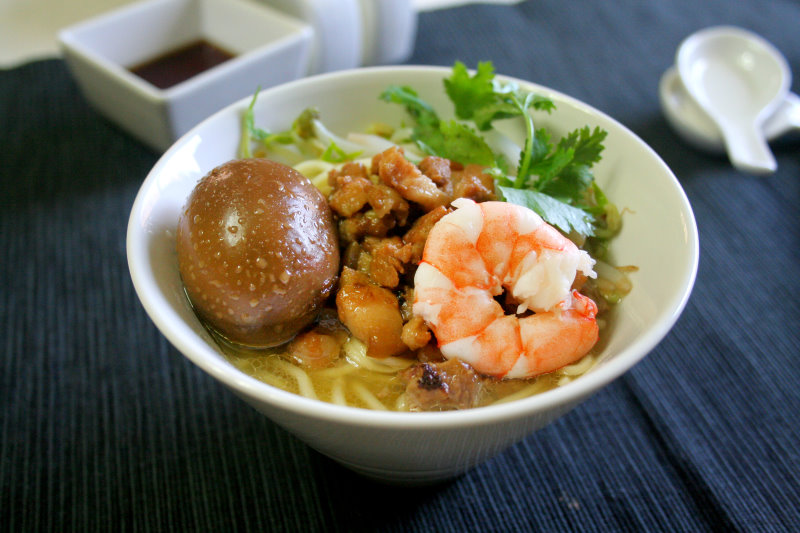
If you’re interested in learning Taiwanese cooking, contact Ivy via email (ivychen999@gmail.com) or Facebook. Recipes and other information can be found at Ivy’s Kitchen.

Thursday, September 5, 2013

Bullet train fares going up but buses remain a bargain

On a good day, a bus from the centre of Tainan to downtown Taipei takes less than four and a half hours. The high-speed rail (HSR) takes one hour 43 minutes, and is never caught in traffic jams. However, the HSR station is about half an hour from central Tainan.

Taking the Tainan-Taipei bus costs between NTD220 (mid-week) and NTD360 (weekends). Unless you snag one of the hard-to-book "early bird" discounted tickets, the HSR journey will cost you NTD1,350, and that's only if you're travelling before October 8. After that date, HSR fares will rise by up to 9.6%. Long-distance bus travel in Taiwan can be a little slow sometimes, but it's always a real bargain. The most expensive bus ticket is nearly half the price of a conventional (TRA, not HSR) train ticket, and usually the bus is quicker.

Buses also have a non-price advantage over the HSR. When taking the bullet train, you've no choice but to get on or off at Taipei Main Railway Station. Most bus companies, by contrast, making a few stops before terminating at or near Taipei Main Station. Kuo-Kuang services, for instance, stop within walking distance of Dalongdong Baoan Temple and then again at Minquan West Road MRT Station before reaching Taipei Main Station - convenient if your hotel is in the city's northeast, or if you simply want to avoid the crowds and stairs at Taipei Main Station.